

The Prophet Hosea, traditional depiction
Hosea
Eighth-century prophet to the northern kingdom, son of Beeri. Commanded to marry the unfaithful Gomer as a living parable of the LORD’s love for faithless Israel (Hos.1–3).
Hosea (Heb. Hoshea, “salvation,” the same root as Joshua and Jesus) is the son of Beeri and the only writing prophet whose ministry was carried out primarily in the northern kingdom of Israel. The opening verse places him in the reigns of Uzziah, Jotham, Ahaz, and Hezekiah of Judah and of Jeroboam II of Israel (Hos.1.1) — a span of roughly 760 to 715 BC that takes him through the brutal final decades of the north and at least to the fall of Samaria in 722 BC. The LORD commands him to take Gomer, “a wife of whoredoms,” and to name their three children Jezreel (“God scatters”), Lo-Ruhamah (“No-mercy”), and Lo-Ammi (“Not-my-people”), each name a sermon (Hos.1.4–9). When Gomer abandons him for other lovers, Hosea is told to buy her back from her slavery (Hos.3.1–3), a living parable of the LORD’s persistent covenant love for an Israel that has run after the Baals. The book oscillates between fierce indictment of Ephraim’s political treachery and idolatry and tender invitations to return — “I will heal their backsliding, I will love them freely” (Hos.14.4). Hosea is quoted in the New Testament for the call out of Egypt (Hos.11.1 in Mat.2.15) and the gathering of a non-people (Hos.2.23 in Rom.9.25).
“Hosea.” Atlas. Accessed 2026. https://fcbh-atlas.vercel.app/en/figure/hosea
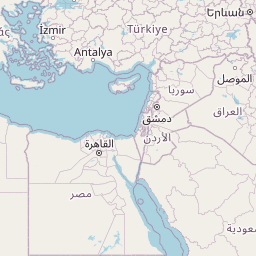
Map data © OpenStreetMap contributors, CARTO
- placeJerusalem
Capital of Judah on a ridge in the Judean hills at 750 m elevation. Site of the Temple. Jesus was crucified an…
- placeBethlehem
Small town 9 km south of Jerusalem. Birthplace of King David, and of Jesus Christ. Name means 'house of bread'…
- placeNazareth
Hill town in Lower Galilee, about 25 km west of the Sea of Galilee. The boyhood home of Jesus.
- placeGalilee
Northern region of ancient Israel, fertile and lake-fringed. Most of Jesus' ministry happened here.
- placeJordan River
Long, narrow river flowing south from Mount Hermon to the Dead Sea. Israel crossed it to enter Canaan; Jesus w…
- placeEgypt
Ancient kingdom of the Nile. Refuge of Abraham and Joseph, then a house of slavery, then the place from which …